

Care for the environment
A city where we care for the environment and live sustainably
Direction 1Greater Sydney has incredible natural beauty and ecologically significant environments. We rely on our healthy natural environments for clean water and air, and to sustain the wellbeing of the people who live here. Healthy natural environments can better withstand and mitigate the impact of shock events such as heatwaves and flooding. However, human activities over our city’s history have degraded the land and waters of Sydney. Urbanisation continues to encroach on our bushland.
Since the pre-industrial period, NSW has warmed by 1.4 to 1.6°C which is 1.4 times faster than the global average. The risk assessment identified escalating threats to Greater Sydney’s natural places and ecosystems. During engagement for the Resilient Sydney Strategy, caring for the environment was a strong theme. People spoke about the healing effect of spending time in natural places, particularly during the pandemic. They expressed grief at environmental loss and damage. First Nations people described environmental loss as a threat to their culture. People raised the need to improve equitable access to nature and green (parks and reserves) and blue (creeks, waterways and beaches) spaces in Greater Sydney.
Managing Resources to Increase Resilience

Caring for Country
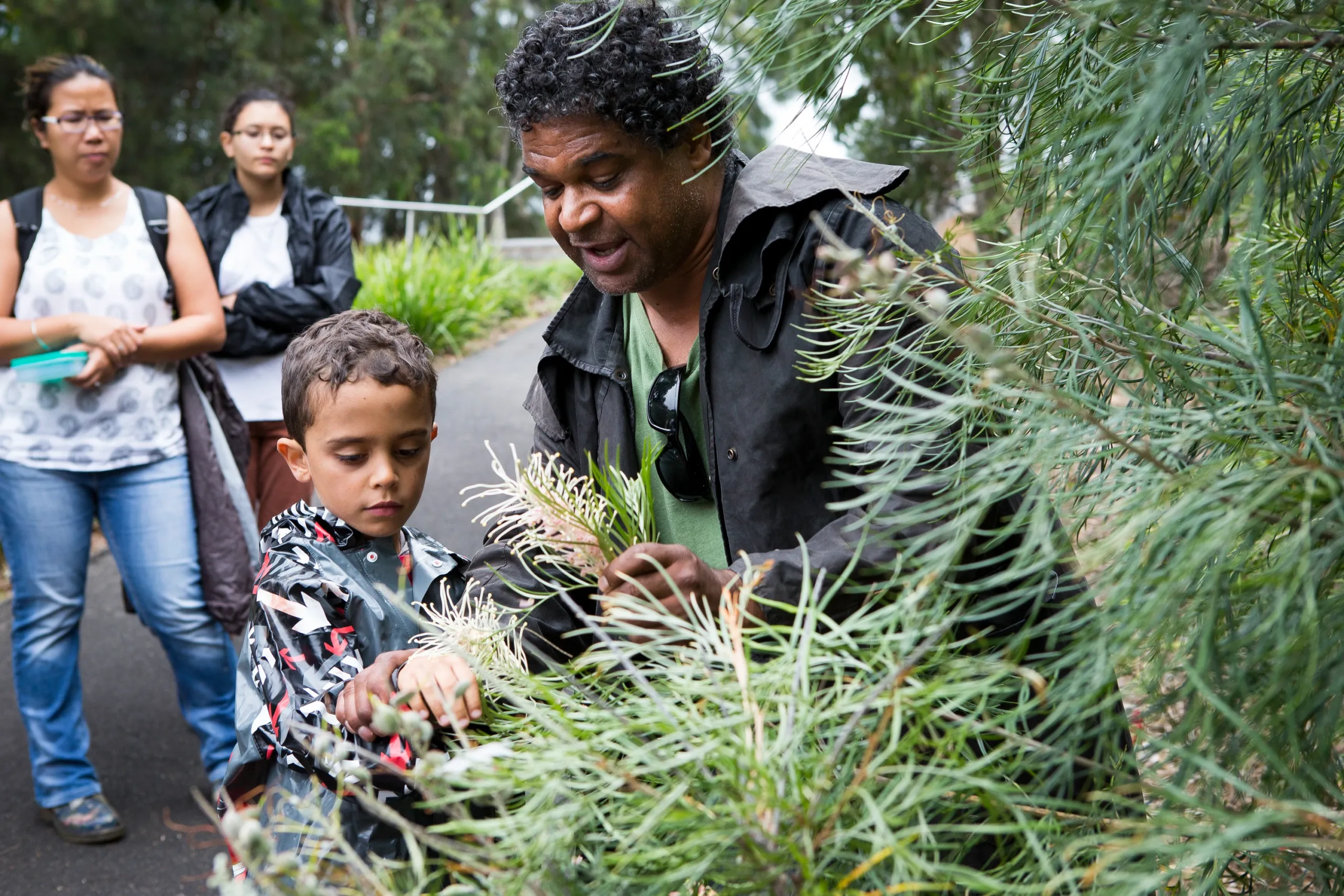
For First Nations people, Country takes in everything within the physical cultural and spiritual landscape. One way of thinking about Caring for Country is to move away from a human-centred approach and towards a Country-centred approach.

Energy and Electrification
As our energy system transforms, benefits remain unequal. Designating Greater Sydney a Renewable Energy Zone would improve access. Solutions are also needed to address rising emissions in sectors like transport and overcome renewable installation barriers in communities facing more challenges like apartment buildings.

Securing Sydney’s Water Supply
Greater Sydney relies heavily on a single surface water reservoir for 85% of its drinking water supply, and during the most recent drought storage levels dropped by 50% in two and a half years. This was much faster depletion than in previous droughts.
Since the pre-industrial period, NSW has warmed by 1.4–1.6°C, 1.4 times faster than the global average.
Action 1
Embed First Nations knowledge and practices in land management
Shocks & stresses
-
 Bushfires
-
 Coastal hazards
-
 Mental health
-
 Racism & vilification
-
 Social cohesion
-
 Environmental degradation
Resilience challenge
Current land management systems do not support caring for Country. Administrative and regulatory barriers restrict access and cultural practices on most land in Greater Sydney. Thousands of years of knowledge held by Traditional Custodians should be better valued and applied in caring for Sydney’s increasingly vulnerable ecosystems.
State disaster mitigation plan alignment
- Nature-based measures
- Social infrastructure and cohesion
Resilience goals
- The connections to Country of First Nations people are nurtured through access to Country, sharing the stories of Country and caring for Country.
- Knowledge and practices to care for Country are protected, restored and shared creating economic opportunities and ensuring future generations can practice culture.
- Country is better cared for and healed, improving the resilience of Sydney’s natural ecosystems.
- Aboriginal-led governance in genuine partnership with land managers and local communities builds a shared responsibility for the wellbeing of Country.
Action 2
Connect and protect green and blue places
Shocks & stresses
-
 Heatwaves
-
 Flooding
-
 Water
Water
-
Mental health
-
 Chronic health conditions
-
Environmental degradation
Resilience challenge
The environment in Greater Sydney is under more pressure as urban areas, infrastructure and climate change impacts increase. People rely on the natural environment for their wellbeing. However, there is inequitable distribution of, and access to, parks and reserves (green places) and creeks, waterways and beaches (blue places) across Greater Sydney.
State disaster mitigation plan alignment
- Mitigation infrastructure
- Nature-based measures
- Infrastructure resilience
- Social infrastructure and cohesion
Resilience goals
- Connected high-quality green and blue places support the wellbeing of people through more opportunity for recreation, active transport and spending time in nature.
- Interconnected green and blue networks support greater biodiversity, protect ecological integrity and increase natural habitats and riparian corridors across Greater Sydney.
- There is collaboration across governments to design, implement, and maintain nature-based measures to improve resilience of ecosystems and environments in Greater Sydney.
- Greater Sydney has a region-wide plan to map, protect and enhance a sustainable network of green and blue places.
Action 3
Increase tree canopy and habitat across Greater Sydney
Shocks & stresses
-
Heatwaves
-
Mental health
-
Water
-
Chronic health conditions
-
 Social isolation
-
Environmental degradation
Resilience challenge
Loss of tree canopy and habitat is contributing to biodiversity loss and intensifying the urban heat effect across Greater Sydney.
State disaster mitigation plan alignment
- Nature-based measures
- Infrastructure resilience
- Social infrastructure and cohesion
Resilience goals
- Greater Sydney has more high-quality, connected forest canopy and multi-storey habitat to enhance urban biodiversity and support ecological and community resilience.
- Parts of Sydney with poor canopy coverage are identified and prioritised for increased greening.
Action 4
Increase biosecurity awareness
Shocks & stresses
-
 Disease outbreak
-
 Health services
-
 Fragmented governance
-
Mental health
-
Environmental degradation
Resilience challenge
Biosecurity threats pose a significant risk to the human and animal populations of Greater Sydney. These threats degrade our natural environments and undermine food production. Known imminent threats include shot hole borer, fire ants and bird flu.
State disaster mitigation plan alignment
- Warning systems
- Community awareness and preparedness
- Nature-based solutions
Resilience goals
- There is greater awareness and better surveillance and data on biosecurity risks, impacts and response requirements both within government and communities.
Action 5
Secure the future of Sydney’s water supply
Shocks & stresses
-
Disease outbreak
-
Water
-
Health services
-
Mental health
-
Environmental degradation
Resilience challenge
Changing climate is impacting rainfall, making drought more likely. This will impact dam water availability and water quality, threatening the security of the water supply to Greater Sydney’s growing population.
State disaster mitigation plan alignment
- Mitigation infrastructure
- Nature-based measures
- Infrastructure resilience
Resilience goals
- Water resources are efficiently managed using integrated water cycle management, water conservation measures and water-sensitive urban design throughout Greater Sydney.
- Greater Sydney has sustainable, cost-effective and reliable sources of drinking water.
Action 6
Support electrification and the energy transition
Shocks & stresses
-
Heatwaves
-
 Energy
-
 Digital networks
-
 Cost of living
-
 Disrupted supply chains
-
Environmental degradation
Resilience challenge
Electrification is a critical step towards energy resilience. It reduces fossil fuel use, which is driving climate change. Significant planning and investment are needed to ensure a smooth and equitable transition to a clean energy future.
State disaster mitigation plan alignment
- Building codes
- Home modification
- Infrastructure resilience
Resilience goals
- Greater Sydney achieves an equitable and lowest-cost energy transition using clean renewable electricity in efficient, electric, grid-interactive buildings.
- Increased use of renewable electricity and energy storage enables householders and businesses to reduce energy costs.
- Sydneysiders have improved health outcomes from reduced air pollution.
- Greater Sydney communities transition equitably from energy consumers to energy producers with a focus on smart demand management and efficiency.
Action 7
Improve the security of Greater Sydney’s food systems
Shocks & stresses
-
 Economic crisis
-
 Waste
Waste
-
Cost of living
-
Fragmented governance
-
Environmental degradation
-
Disrupted supply chains
Resilience challenge
Food security is under pressure in Greater Sydney. There is inequity of access to nutritious and healthy food. As development grows and farmland becomes urban precincts, Greater Sydney’s access to local and affordable food supplies continue to decline.
State disaster mitigation plan alignment
- Community awareness and preparedness
- Social infrastructure and cohesion
Resilience goals
- People in Greater Sydney have reliable access to good quality, affordable and nutritious food to support their physical and mental wellbeing.
Action 8
Address Greater Sydney’s waste crisis
Shocks & stresses
-
Disease outbreak
-
Waste
-
Fragmented governance
-
Environmental degradation
-
Disrupted supply chains
Resilience challenge
The way we manage materials and residual waste is a key risk to the health and safety of people and the environment. Adding to this, Greater Sydney is running out of landfill space. Urgent action is needed to avoid waste production and transform waste processing technology and infrastructure.
State disaster mitigation plan alignment
- Strategic planning controls
- Infrastructure resilience
Resilience goals
- People living and doing business in Greater Sydney participate in and benefit from a safe, equitable, cost-effective and efficient materials management system.
- Greater Sydney’s waste management system is resilient to disruptions and supports a circular economy and a net zero city.
- Councils more efficiently manage costs and emissions and improve the quality of waste streams, leading to higher-value recycled products and cost recovery.